
Classroom Management
Classroom Management: What Works in Year One
Classroom management essentials: teacher presence, reliable routines, concise rules, and calm strategies to handle disruptions effectively.
Teaching Methods
How to divide groups fairly, assign clear roles, keep noise levels down, and display time limits on screen for smooth classroom group work.
Read article: Organizing Group Work in the Classroom
Classroom Management
Classroom management essentials: teacher presence, reliable routines, concise rules, and calm strategies to handle disruptions effectively.
School Year Milestones
What to prioritize during the first weeks with a new class: student names, seating charts, daily routines, class rules, and family communication.
Classroom Management
How to establish four or five clear classroom rules with your students, display them on screen, and reference them calmly when reminders are needed.
EdTech & Technology
Which software tools teachers genuinely need in the classroom, what to consider for privacy, and why keeping your digital toolkit small saves time.
Student Teaching
How formal teaching evaluations work: timing lesson phases, making lesson goals visible, setting buffers, and reflecting effectively during debriefs.
Classroom Rituals
A structured 12-minute morning meeting routine with greetings, visual daily schedules, quick check-ins, and clear transitions to the first lesson.
Teaching Methods
Individual work, pair work, group activities, and whole-class discussions: when to use each format and how to transition smoothly with visual cues.
Teaching Methods
Four adjustments that keep silent study quiet: clear instructions on screen, visible timers, silent help signals, and extension tasks for fast finishers.
Student Teaching
Step-by-step preparation for your formal lesson observation: topic selection, timing buffers, whiteboard setups, tech dry runs, and prepping your class.
Student Teaching
Structure, lesson tables, and minute allocations for formal lesson plans: drafting learning objectives, timing buffers, and classroom screen setups.
Teaching Methods
Warm-up, exploration, and synthesis: how lesson phases connect, realistic timing allocations, and displaying visual progress cues on classroom screens.
Classroom Management
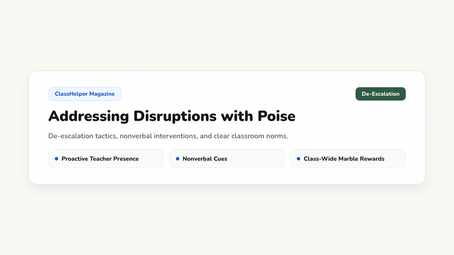
Why disruptions happen, how clear routines and silent visual cues prevent them, and how to respond calmly without interrupting the flow of learning.
One click, no sign-up, right in your browser.
Open Whiteboard