
Teaching Methods
Organizing Group Work in the Classroom
How to divide groups fairly, assign clear roles, keep noise levels down, and display time limits on screen for smooth classroom group work.
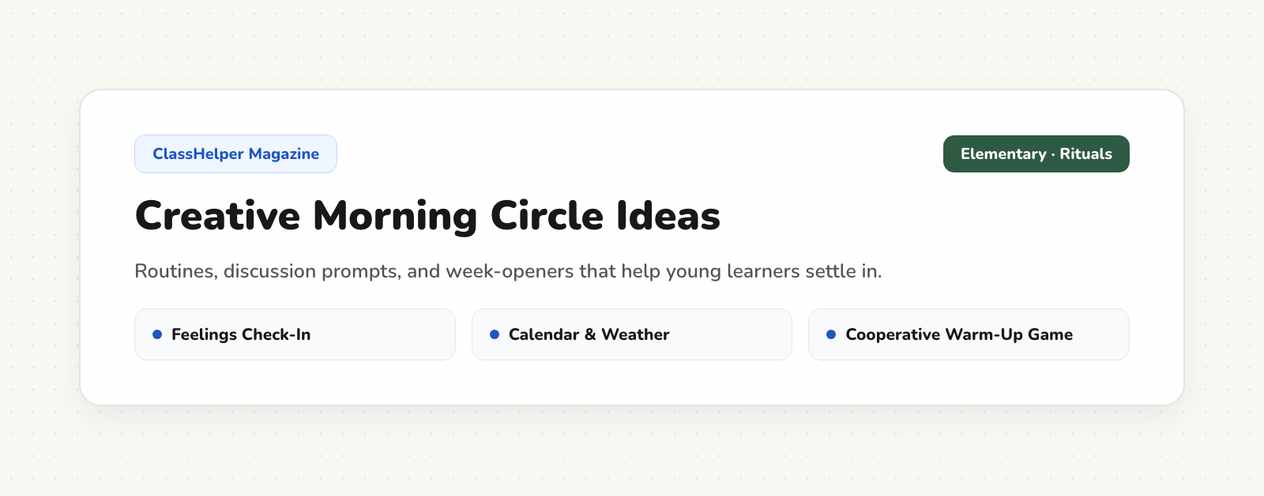
A classroom morning meeting succeeds when it is concise, follows a predictable routine, and concludes with a clear transition. This guide details a reliable 12-minute framework and shares engaging prompts you can rotate through the week.
Students participate eagerly in morning meetings once the routine becomes second nature. Four simple steps are plenty: morning greeting, daily schedule preview, quick community check-in, and transition into the first lesson. Keep this four-part structure consistent; only your daily check-in prompt changes.
The second step relies on a shared visual anchor. Project your visual daily schedule on the front display, showing the date, day of the week, and upcoming subjects. Students who arrive feeling disorganized find immediate grounding without needing to ask repeated questions.
Consistent seating in the circle minimizes morning shuffling. If you already follow an assigned room layout, mirror the order from your classroom seating chart during morning circle.
Asking a generic “How is everyone doing?” usually results in twenty uninspired replies. Ask specific, engaging questions: something interesting they built over the weekend, a moment they look forward to today, or a problem they solved yesterday. Project one clear question on screen so visual learners can process it easily.
Give students the option to pass quietly. Passing should be an accepted choice; otherwise, community sharing feels forced. In inclusive classrooms, visual mood meters work wonderfully: display three mood faces and let students point to how they feel.
Use a talking piece to anchor speaking turns. The student holding the item speaks while everyone else listens attentively. This aligns with standard classroom governance routines, making it easy to transition later into our structured class council meeting template.
Sometimes your morning meeting benefits from a short two-minute activity: a brainteaser of the day, a handwriting challenge on the board, a brief stretch, or a calendar check highlighting upcoming events.
When choosing a student to share or lead, use a transparent visual selector rather than asking for volunteers. This ensures equal participation across the year. The random name selector tool makes student picking fair and effortless.
Keep your activity prompts on index cards or saved in a small digital list so you never have to scramble in the morning. Ten dependable prompts are plenty for the school year, as children thrive on familiar structures. For more foundational rituals, consult our guide on first weeks as a new homeroom teacher.
Adapt your meeting length to the room’s energy. Before holiday breaks or following three-day weekends, classes are often restless; trim the circle to a greeting and schedule check rather than forcing extended discussion.
A morning meeting that drags on steals time from your first academic block. Set a quiet countdown timer for twelve minutes and wrap up promptly when it rings, even mid-discussion. Resume where you left off the next day.
Close with an identical transition statement every morning outlining the first learning task. Students then pack up the circle and begin work immediately. Learn how to guide students into focused study in our guide on quiet independent work without distractions, and explore our toolkit overview in essential classroom apps for daily teaching.
Four consistent steps, twelve focused minutes, and daily predictability make a morning meeting thrive. Variety belongs in your discussion prompts, not your core structure.
What is clearly projected on screen needs no verbal repeating. A visible daily agenda at the front of the room saves more instructional time than the meeting itself takes.
ClassHelper Editorial Team
The ClassHelper editorial team creates practical guides and lesson routines for teachers. Tool specifications and pedagogical strategies are tested directly in the digital whiteboard.
Teaching Methods
How to divide groups fairly, assign clear roles, keep noise levels down, and display time limits on screen for smooth classroom group work.
Classroom Management
Classroom management essentials: teacher presence, reliable routines, concise rules, and calm strategies to handle disruptions effectively.

School Year Milestones
What to prioritize during the first weeks with a new class: student names, seating charts, daily routines, class rules, and family communication.
One click, no sign-up, right in your browser.
Open Whiteboard